Why Confidentiality Matters in Executive Search
You know how small the business world in Colombia feels sometimes. Everyone seems to know everyone else in the C-suite. A single rumor about a leadership change can spiral out of control in hours. This chatter causes stock volatility. It creates anxiety among your employees. Competitors might even use the uncertainty to poach your key clients.
We see this happen far too often when searches aren’t handled correctly.
The stakes are incredibly high in our region. Colombian business culture relies heavily on personal relationships. A premature leak doesn’t just hurt the company. It can damage the reputation of the incumbent leader and the incoming candidate.
Confidential executive search protects you from these risks. It is a precise operation designed to secure top talent without alerting the market until the deal is done.
The Step-by-Step Process
Step 1: Engagement and Briefing
We begin every search with a deep dive into your specific needs. This meeting usually involves your board chair, CEO, or CHRO. It establishes exactly how we will operate.
The briefing covers these core parameters:
- Role Requirements: We define the hard skills and the strategic mandate for the new hire.
- The “Off-Limits” List: We agree on which competitor companies we can target and which client relationships must be protected.
- Protocol Definition: You decide who inside your company gets to know about the search.
- Financial Framework: We clarify the retained fee structure, which is typically a percentage of the role’s total annual compensation.
Our team signs a strict Non-Disclosure Agreement (NDA) at this moment. Secure communication channels are set up immediately. We often use encrypted platforms like Signal or dedicated client portals rather than standard email servers to prevent accidental forwarding.
Step 2: Market Mapping and Research
Our research team starts mapping the market the moment the brief is signed. This work happens entirely in the shadows. You will not see job advertisements on LinkedIn or El Empleo.
The difference between standard recruiting and confidential mapping is distinct:
| Feature | Standard Recruiting | Confidential Executive Search |
|---|---|---|
| Visibility | Public job posts and ads | Zero public footprint |
| Candidate Pool | Active job seekers (approx. 20%) | Passive leaders (approx. 80%) |
| Outreach | Inbound applications | Targeted, private outreach |
| Competitor Intel | None | detailed org charts of rivals |
We focus on “Deep Web” research during this phase.
Proprietary databases like Invenias or Clockwork allow us to map leadership structures without alerting anyone. The goal is to identify the “passive” candidates. These are high-performers currently employed at your competitors who aren’t looking for a new job but would move for the right opportunity.
This phase is critical in Colombia. The talent pool in sectors like energy, banking, and infrastructure is concentrated. We navigate these overlapping networks carefully to avoid triggering the local rumor mill.
Step 3: Discreet Candidate Approach
We approach the identified candidates once the target list is ready. These are never cold calls. Senior consultants manage these conversations because they understand the industry nuances.
Our approach follows a specific script:
- Anonymity First: We describe the opportunity’s scale and challenge without naming your company.
- Interest Check: The consultant verifies if the candidate is open to a move before sharing details.
- Secure Channels: Discussions move immediately to personal emails or private phones.
- The “Non-Solicitation” Balance: We respect the candidate’s current employment while gauging their interest.
This step requires tact. A clumsy approach can insult a senior executive or reveal your identity. We frame the conversation around career progression and strategic impact rather than just a job switch.
Step 4: Candidate Assessment and Evaluation
Candidates who pass the initial screen enter a rigorous candidate evaluation phase. We look for reasons to rule them out just as much as reasons to rule them in.
The assessment layers include:
- Competency Interviews: We drill down into specific examples of past performance using the STAR method (Situation, Task, Action, Result).
- Psychometric Testing: Tools like Hogan Assessments are standard for predicting leadership performance and potential derailers under stress.
- Local Background Checks: We review records with the Procuraduría and Contraloría to ensure full compliance with Colombian regulations.
- Cultural Fit Analysis: Our team assesses if their management style matches your company’s values.
Verification goes beyond a simple resume check. We analyze their track record of actual business impact. Did they really lead that merger? What was their true role in the restructuring? We find the answers.
Step 5: Shortlist Presentation
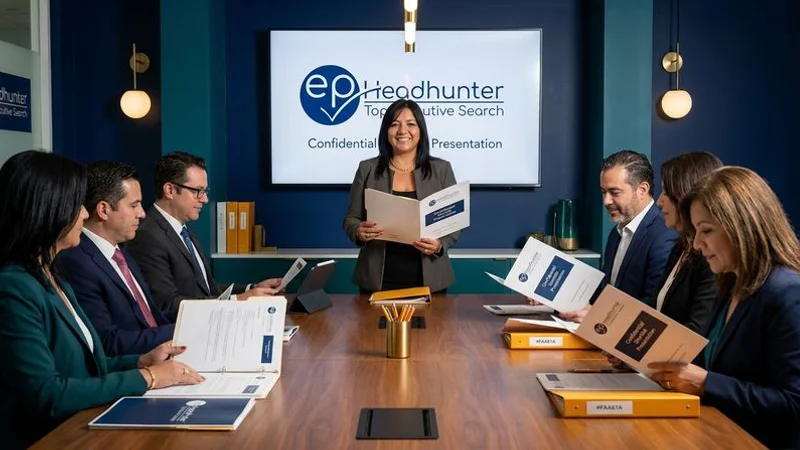
Our team presents a final shortlist of three to five vetted candidates. You receive a comprehensive dossier for each person.
This dossier includes specific data points:
| Dossier Component | Contents |
|---|---|
| Executive Summary | Career narrative and verified achievements |
| Compensation Data | Current salary versus your budget |
| Psychometric Profile | Behavioral traits and cognitive reasoning scores |
| Risk Analysis | Any potential conflicts or non-compete clauses |
| Motivation Check | Why they effectively want this specific role |
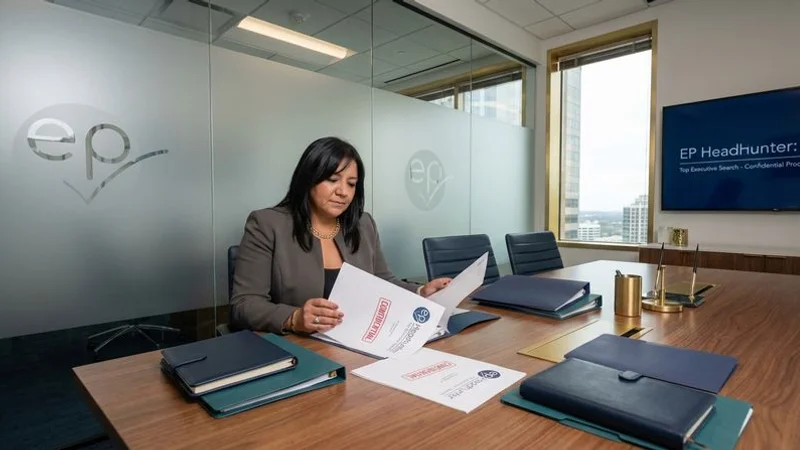
We usually present this in a secure, in-person meeting. Paper copies are often numbered and watermarked. We collect them at the end of the session to ensure no documents are left behind in a conference room.
Step 6: Client Interviews and Final Selection
You conduct the interviews in this phase. We facilitate everything to keep your involvement discreet.
The logistics are managed with military precision:
- Neutral Ground: Interviews take place in private hotel suites or rented executive clubs rather than your HQ.
- Staggered Times: We schedule gaps between candidates so they never cross paths in the lobby.
- Cover Stories: Candidates often need a plausible reason to be absent from their current office.
- Rapid Feedback: Momentum is key to keeping high-level talent engaged.
Our role is to act as the intermediary. We debrief the candidate immediately after the meeting to gauge their interest and address any concerns they might have about your company.
Step 7: Offer Negotiation and Onboarding Support
We guide the process to a close once you select a finalist. This is where deals often break down if not handled correctly.
The closing process involves:
- Compensation Structuring: We help structure the offer, often using the “Salario Integral” model (13 minimum wages plus benefits factor) common for executives in Colombia.
- Resignation Coaching: The candidate receives advice on how to resign gracefully to avoid burning bridges.
- Counter-Offer Management: We prepare the candidate for the inevitable counter-offer from their current employer.
- Integration Planning: Statistics show 40% of executives fail in the first 18 months. We help plan the first 90 days to ensure success.
Maintaining Confidentiality Throughout
We enforce strict protocols to protect the integrity of the search.
Key safeguards include:
- Code Names: We assign the project a name like “Project Titan” so the real company name never appears in internal emails.
- Need-to-Know Access: Only the specific consultants working on the file have access to the data.
- GDPR and Habeas Data Compliance: We adhere strictly to Colombia’s Law 1581 of 2012 regarding data privacy.
- Zero Publicity: We never announce the placement on social media until you give us explicit written permission.
The EP HeadHunter Approach to Confidential Search
Confidentiality is the foundation of our business at EP HeadHunter. We operate across Colombia and Latin America. Our team knows that a single leak can ruin a negotiation.
We protect your reputation as fiercely as we hunt for talent.
Considering a confidential leadership appointment? Contact EP HeadHunter to discuss how our discreet search methodology can deliver the right executive while safeguarding your organisation’s reputation.