The Cultural Fit Paradox
We see a troubling trend in executive hiring that most business owners overlook until it is too late. You find a candidate with a flawless CV and a track record of driving revenue, yet six months later, they are gone. This scenario is becoming statistically more common. According to a 2025 report by Russell Reynolds Associates, global CEO turnover has hit record highs, with a 16% increase in departures compared to the previous year.
The problem is rarely technical competence. It is almost always a failure of integration. When done well, cultural fit assessment ensures a new leader can build trust and amplify your organization’s strengths. When done poorly, it becomes a proxy for bias—a mechanism for selecting leaders who look and think exactly like those already in place.
Our team helps boards and hiring committees evaluate alignment rigorously without sacrificing diversity. This article examines how to achieve that balance, particularly in the nuanced Colombian and Latin American executive market.
What Is Cultural Fit and What Is It Not?
What Cultural Fit Means
Cultural fit refers to the alignment between an individual’s values and the organization’s established norms. A culturally aligned executive does not just “get along” with others. They understand how to navigate the unwritten rules of your specific business environment.
We define true alignment through these actionable behaviors:
- Value Resonance: They prioritize the same principles (e.g., speed vs. accuracy) that your company values.
- Communication Flow: They speak in a way that your team naturally understands and respects.
- Risk Calibration: Their decision-making matches the organization’s appetite for uncertainty.
- Adaptive Leadership: They adjust their management style to fit the company’s current growth stage.
What Cultural Fit Does Not Mean
Cultural fit is often confused with “likability,” which is a costly mistake. We advise clients to distinguish between “Fit” and “Add” to avoid stagnation.
| Concept | What It Means | Why It Matters |
|---|---|---|
| Cultural Fit | Alignment with core values and ethics. | Ensures cohesion and trust. |
| Cultural Add | bringing new perspectives or behaviors. | Drives innovation and prevents groupthink. |
| Likability | Personal chemistry or shared hobbies. | Irrelevant to performance; often masks bias. |
| Assimilation | Forcing a hire to act exactly like the founder. | Kills the unique value the leader was hired to bring. |
Why Cultural Fit Matters More at the Executive Level
Cultural misalignment at the mid-management level is manageable. The individual can be coached, or the team can compensate. At the executive level, however, the damage is systemic and expensive.
The Executive Amplification Effect
Senior leaders set the tone for entire divisions. Their behavior acts as a multiplier.
- Communication style: A leader who prefers formal, written memos will paralyze a startup that relies on quick, verbal syncs.
- Decision-making approach: A consensus-driven executive will appear weak in a company that values directive, top-down action.
- Risk appetite: A conservative CFO in a high-growth tech firm may stifle the very initiatives required for scaling.
- Conflict resolution: An executive who avoids confrontation will fail in a culture that values radical candor.
The Financial and Legal Cost of Misalignment
The cost of a failed executive hire is significantly higher than most business owners realize. Recent 2025 data from Armada Talent Group suggests the total cost of a bad executive hire can range from 2 to 5 times the individual’s annual salary.
We also urge you to consider the specific legal landscape in Colombia. Under the Colombian Substantive Labor Code, terminating a high-earning executive without “just cause” triggers substantial indemnity payments.
- Indemnity Costs: For contracts earning more than ten times the minimum wage, you must pay 20 days of salary for the first year of service and 15 days for each subsequent year.
- Late Penalties: If you delay severance payment, Colombian law imposes a sanction of one day’s salary for every day of delay.
- Strategic Disruption: Beyond the payout, you lose months of momentum while initiatives championed by the departed leader are abandoned.
How to Assess Cultural Fit Without Creating Bias
1. Define the Culture Explicitly
You cannot measure what you have not defined. Vague descriptors like “collaborative” are useless in an assessment context.
We recommend creating specific behavioral anchors:
- Core values: Define the non-negotiables (e.g., “We value speed over perfection”).
- Working norms: Specify how work gets done (e.g., “We expect written pre-reads before every meeting”).
- Leadership expectations: Clarify the desired power dynamic (e.g., “Leaders must mentor, not just manage”).
2. Use Structured Assessment Tools
Gut feeling is not a metric. Cultural fit should be measured with the same rigor as financial performance.
Organisational Culture Profile (OCP)
The OCP asks both the candidate and a representative group within the organization to rank value statements. This provides a quantitative gap analysis between the candidate’s preferences and the company’s reality.
Values-Based Interview Questions
We suggest using questions that force candidates to choose between two positive outcomes to reveal their priorities.
| Cultural Dimension | Sample Question | What to Look For |
|---|---|---|
| Decision-making | ”Describe a time you had to make a decision with only 50% of the data. How did you proceed?” | Comfort with ambiguity vs. need for certainty. |
| Risk tolerance | ”Tell me about a calculated risk that failed. How did you communicate it to the board?” | Transparency and resilience. |
| Communication | ”How do you deliver bad news to a high-performing team?” | Empathy vs. bluntness. |
| Conflict | ”Describe a situation where you fundamentally disagreed with the CEO.” | Ability to challenge authority respectfully. |
Psychometric Data (Hogan & DISC)
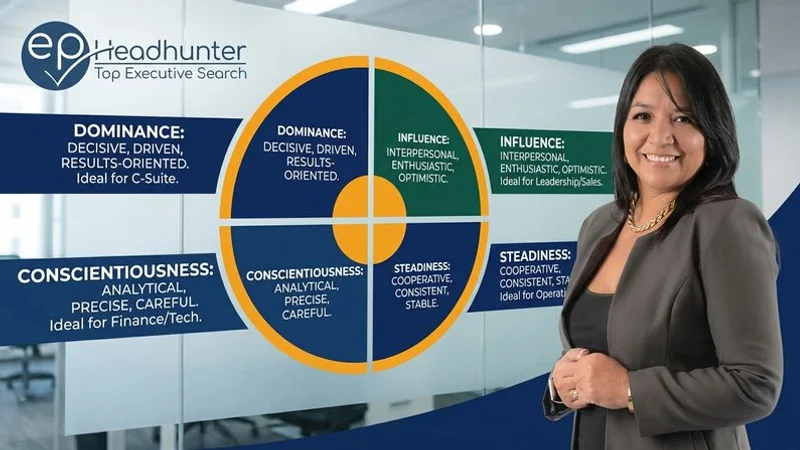
Tools like Hogan Assessments are particularly effective for executive roles. They reveal “derailers”—traits that emerge under stress. A candidate might be charming in an interview but exhibit volatility under pressure, which Hogan data can predict.
3. Involve Multiple Stakeholders
Cultural fit is multidimensional. A candidate might manage up well to the Board but alienate their direct reports.
- Board members: Assess alignment with long-term strategy and governance.
- Direct reports: Evaluate the day-to-day management style.
- Peers: Judge collaboration and cross-functional friction.
- External Partners: Clients can provide an unbiased view of the candidate’s market presence.
4. Test in Context
The most reliable assessments simulate the actual job.
- Working sessions: Pay the finalist to lead a half-day strategy session with your team.
- Site visits: Observe how they treat the receptionist or junior staff during a facility tour.
- Social interactions: A dinner allows you to see their “off-duty” persona, which often reveals their true relational style.
Cultural Fit in the Colombian and Latin American Context
Colombia is not a monolith. Assessing cultural fit here requires a deep understanding of regional and structural nuances that foreign assessments often miss.
Regional “Micro-Cultures”
Colombia has distinct business cultures depending on the city.
- Bogotá (Rolos): Business here tends to be formal, hierarchical, and punctual. A direct, “strictly business” executive fits well here but might struggle elsewhere.
- Medellín (Paisas): The culture is warmer and relationship-driven, yet intensely commercial. “No dar papaya” (don’t make yourself a target) is a cultural concept implying street smarts is valued alongside book smarts.
- The Coast (Barranquilla/Cartagena): Time is more flexible, and relationships are paramount. A rigid, clock-watching executive may fail to build the necessary rapport to get things done.
Relationship Orientation
Latin American business relies heavily on confianza (trust). An executive who is technically brilliant but interpersonally distant will likely fail. We look for candidates who build genuine rapport rather than just transactional connections.
Family-Owned Business Dynamics
Family influence is massive in this market. According to 2024 data from the Superintendencia de Sociedades, approximately 70% of Colombian companies are family-owned.
Executives entering these environments face unique challenges:
- Unwritten Rules: Power often resides outside the org chart with family matriarchs or patriarchs.
- Succession Sensitivity: Only 30% of family businesses survive to the second generation, making the non-family executive’s role in succession planning critical for professionalization.
- Loyalty vs. Competence: The new hire must navigate legacy employees who may be “protected” by the family.

From Cultural Fit to Cultural Impact
The most sophisticated organizations are moving beyond “fit” to assess “cultural impact.” You should ask not just “Will this leader survive here?” but “How will this leader evolve us?”
This shift is vital for companies in transition:
- Internationalization: A local company expanding abroad needs a leader who challenges local norms to adopt global standards.
- Turnaround: A company recovering from a scandal needs a leader whose ethics are rigid, even if the current culture is lax.
- Professionalization: A family business needs a leader who respects tradition but introduces necessary process discipline.
In these scenarios, the ideal candidate is a “bridge”—someone who connects your history with your future.
How EP HeadHunter Assesses Cultural Fit
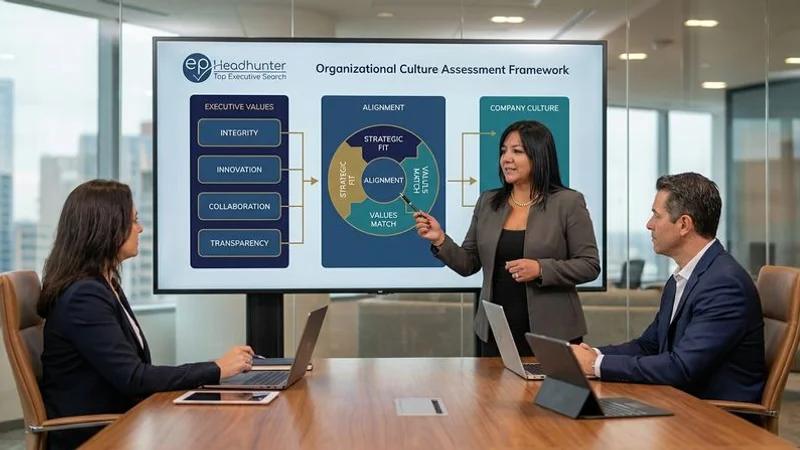
We integrate cultural fit assessment into every stage of the executive search process. Our methodology begins with a cultural audit of your organization to establish a baseline. We then use validated tools, including Hogan Assessments and structured behavioral interviewing, to measure candidates against that specific baseline.
Our team presents these findings with the contextual sensitivity that the Colombian market demands. We do not just give you a resume; we give you a risk profile.
Concerned about cultural alignment in your next executive hire? Contact EP HeadHunter to discuss how our cultural fit assessment methodology can protect your organization from the hidden costs of misalignment.