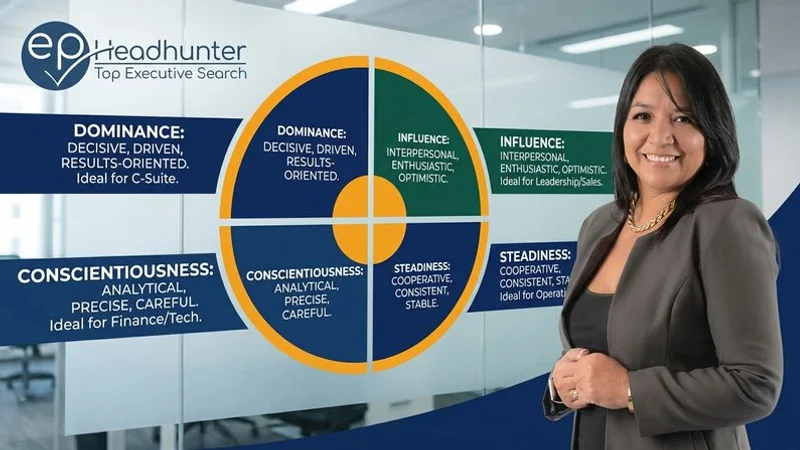
[AddInfographic]
What Is 360-Degree Feedback?
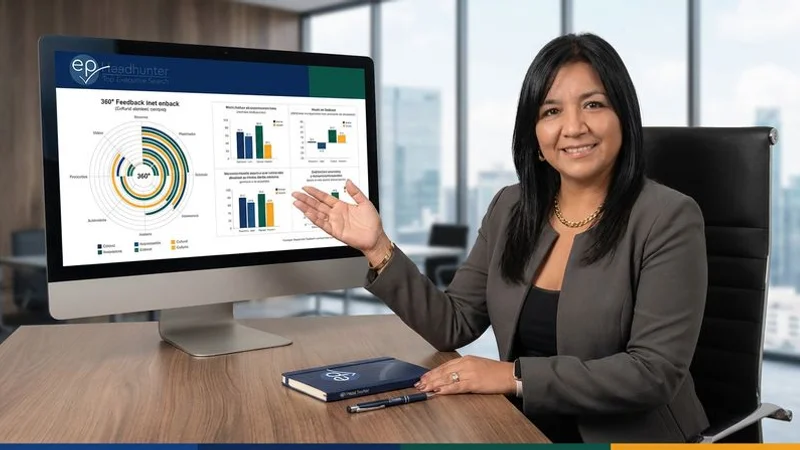
360-degree feedback, often called multi-rater feedback, is a comprehensive talent evaluation method where an executive’s performance is assessed by a full circle of stakeholders: peers, direct reports, supervisors, and occasionally board members or key clients. The leader also completes a self-assessment, which allows us to compare their internal view against external reality.
We find that this tool acts as a reality check in a way standard interviews cannot. While a resume tells you what a candidate has done, a 360-degree review reveals how they get things done. It highlights the difference between a leader who drives results through inspiration and one who burns out their team to hit a target.
This guide explores when this tool is most effective for executive selection in Colombia, how to navigate local data privacy laws like Law 1581, and how to filter out the cultural “noise” to get the truth.
When to Use 360-Degree Feedback in Executive Selection
This process is resource-intensive, so it isn’t necessary for every management hire. Our team recommends reserving it for high-stakes situations where the cost of a mistake is exponential.
Family Business Professionalization (The “Empalme”)
In Colombia, where roughly 86% of companies are family-owned, the transition from a family-led management team to external professional leadership is a critical moment. You are often replacing a founder or a family member with an outsider who must earn the trust of long-standing employees.
Why it matters here:
- Cultural Fit Check: An external executive might have the right MBA but the wrong “tact” for a close-knit family culture.
- Stakeholder Buy-in: Involving family members in the feedback process (even if just as observers) helps them feel heard during the transition.
- Authority Verification: It confirms if the candidate has wielded authority effectively in past roles without relying on the family name.
Internal Promotions and Succession Planning
When moving a functional leader (like a CFO) into a general management role (like CEO) as part of succession planning, past performance reviews often miss the mark. They focus on technical competence, not the soft skills required to lead former peers.
Key benefits for internal candidates:
- Peer Perception: It reveals if the candidate is respected by the very people they will soon be managing.
- Strategic vs. Operational: It highlights if they have shifted from “doing the work” to “leading the strategy.”
- Blind Spot Identification: We often see leaders who think they are “hands-off” while their team rates them as micromanagers.
Final-Stage External Candidate Evaluation
For C-suite roles where total compensation can exceed COP 500 million annually, a bad executive search hire is a financial disaster. Studies suggest the cost of a failed executive hire can reach 213% of their annual salary—meaning a bad choice could cost your company over COP 1 billion.
Practical considerations for external 360s:
- Explicit Consent is Non-Negotiable: Under Colombian Law 1581 of 2012 (Habeas Data), you must have written authorization to process this personal data.
- Independent Verification: Do not rely solely on the list of references the candidate provides. A search firm should seek out “off-list” references to get an unvarnished view.
- Confidentiality: Raters must know their specific comments won’t be leaked, or they will simply provide polite, generic praise.

How to Implement 360-Degree Feedback Effectively
Step 1: Define the Competency Framework
You cannot measure what you haven’t defined. We suggest aligning the feedback against specific, observable behaviors relevant to the Colombian market, such as adaptability and emotional intelligence.
Example competencies for a CEO appointment:
| Competency | Behavioural Indicators |
|---|---|
| Strategic Agility | Anticipates market shifts (e.g., regulatory changes in LatAm) and pivots quickly. |
| Cultural Intelligence | Navigates diverse social stratas and builds genuine rapport (“Don de gentes”). |
| Decision Quality | Makes tough calls with incomplete information without succumbing to “analysis paralysis.” |
| Talent Magnetism | Attracts and retains top talent in a competitive market like Bogotá or Medellín. |
| Execution Discipline | Moves beyond planning to ensure operational follow-through. |
Step 2: Select Raters Carefully
The quality of the output is only as good as the input. For an executive role, you need a mix that covers all angles of the candidate’s professional life.
Recommended Rater Mix:
- Superiors (1-2): Board members or regional VPs who can speak to strategic alignment.
- Peers (3-5): Fellow C-suite members who can evaluate collaboration and silo-busting.
- Direct Reports (3-5): The critical group. They know the candidate’s true leadership style better than anyone.
- External Stakeholders (Optional): Key clients or government relations contacts, which are often vital in our region.
Step 3: Administer the Assessment
We strongly advise against managing this process via email or spreadsheets, as it compromises anonymity and security.
Best Practice Administration:
- Use Validated Platforms: Tools like Hogan Assessments or PDA International are widely recognized in Latin America and offer robust benchmarks.
- Strict Anonymity: Ensure raters know that reports are aggregated. If a rater thinks the candidate will know who said what, they will lie.
- Habeas Data Compliance: Ensure the platform you use is compliant with Colombian data protection standards, especially if servers are located abroad.
Step 4: Analyse and Interpret Results
Raw data can be misleading without context. A score of 3.5/5 might be excellent in a highly critical engineering culture but a red flag in a sales organization.
Analysis Checklist:
- The “Honeymoon” Effect: Is the feedback overly positive because the candidate hasn’t been challenged yet?
- Gap Analysis: Look for massive differences between how the candidate sees themselves (Self) and how their team sees them (Direct Reports). A wide gap here usually indicates low self-awareness.
- Qualitative Themes: Read the comments. The “why” behind the score is often where the real insight hides.
Common Pitfalls and How to Avoid Them
Pitfall 1: The “Simpatía” Filter (Cultural Bias)
In Latin American culture, we value social harmony and “being nice” (simpatía). This often leads to inflated ratings because peers don’t want to be the one to give a bad score.
The Fix: Focus heavily on the qualitative comments and look for “coded” language. A comment like “He is very firm in his convictions” might actually mean “He is stubborn and doesn’t listen.”
Pitfall 2: The “Rosca” Effect
It is common for executives to have close-knit circles of influence. If a candidate selects only their friends as raters, the data will be useless.
The Fix: The search firm or HR director must insist on selecting at least half of the raters from a neutral list, not just the candidate’s provided references.
Pitfall 3: Breaching Confidentiality
If a candidate figures out who gave them a low rating, it can destroy relationships and lead to retaliation. This is the fastest way to kill the credibility of your review process.
The Fix: Never release raw data to the candidate. Only provide a summarized report where comments are randomized and identifying details are scrubbed.
Pitfall 4: Ignoring the Context
A leader brought in to “turn around” a failing division will naturally have lower popularity scores than one managing a growing, profitable unit.
The Fix: We always weight the feedback against the specific business challenge the leader was facing at the time. Friction is sometimes a sign of necessary change, not poor leadership.
The Value of 360-Degree Feedback in Executive Selection
When executed with precision, this tool offers three distinct competitive advantages:
- Risk Mitigation: It exposes behavioral risks (like volatility or indecision) that are easy to hide in a polished interview but impossible to hide from a team over 12 months.
- Onboarding Roadmap: The feedback provides a “user manual” for the new hire. You can say, “Your team loves your vision but feels you move too fast. Let’s focus your first 90 days on listening.”
- Governance & Compliance: For board-level appointments, having a data-backed dossier demonstrates to shareholders that the selection was rigorous and objective, not based on personal preference.
How EP HeadHunter Integrates 360-Degree Feedback
At EP HeadHunter, we don’t just hand you a report; we interpret the story behind the data. Our process integrates tools like Hogan Assessments with deep local market intelligence to separate genuine leadership talent from good marketing. We ensure every check complies with Colombian Law 1581, protecting both your company and the candidate.
Ready to make your next executive hire with confidence? Contact EP HeadHunter to discuss how we can build a 360-degree validation process that secures the right leader for your future.